
You can spend six figures on a theater and still watch it through a $299 box. Most people do. The projector, the speakers, the processor and the room are all built to reference level, and then the movie arrives over the internet squeezed down to fit the pipe.
Kaleidescape exists to fix that one link. It’s one of the first questions people ask when they plan a theater: is it worth it, or is the Apple TV good enough?
The honest answer is that it depends on the screen and the sound system more than on either box. Here’s how to tell which side of that line your room is on.
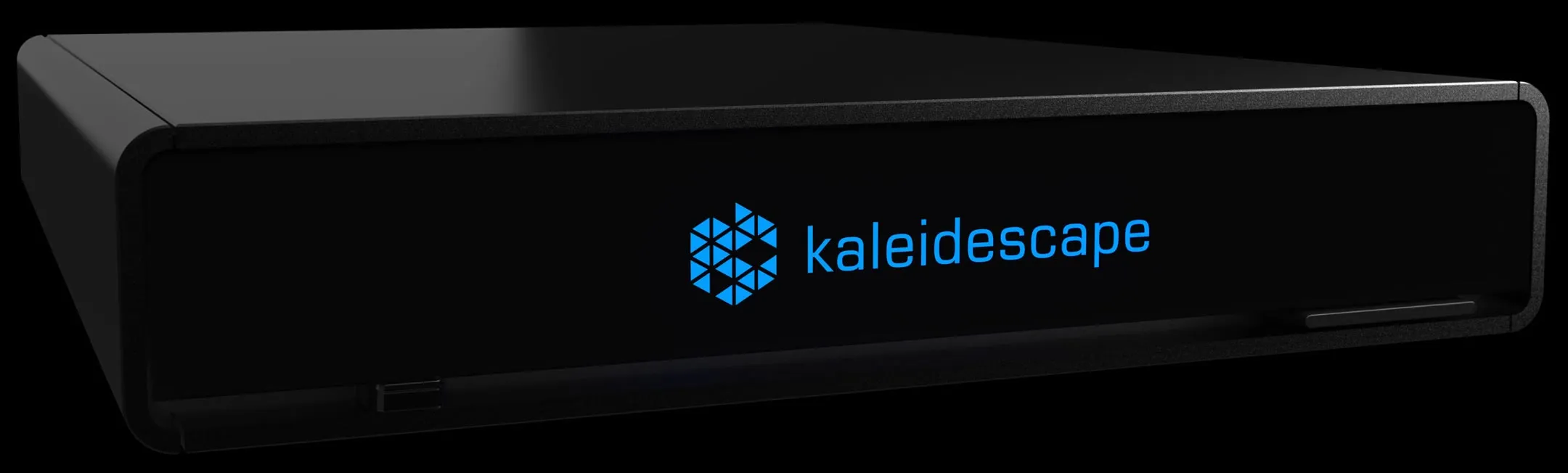 The Kaleidescape Strato V. Photo: Kaleidescape.
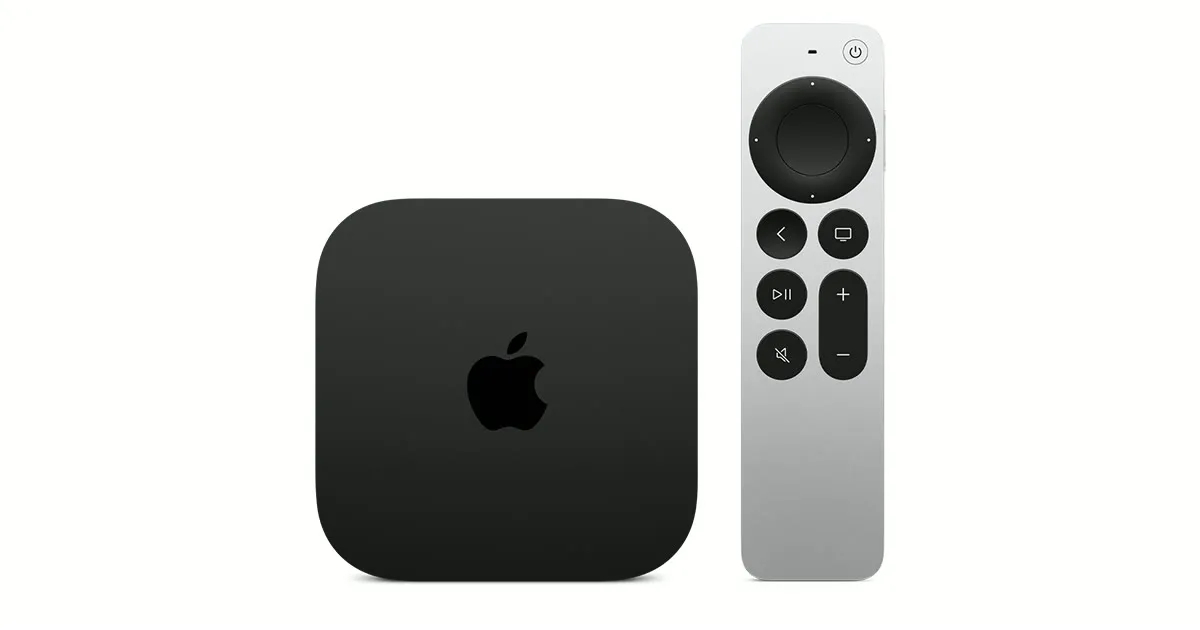 The Apple TV 4K. Photo: Apple.
What you’re actually comparing
The Apple TV streams. The movie plays as it arrives, and the quality is whatever the service sends at that moment.
Kaleidescape downloads. You buy the movie from the Kaleidescape store, the whole file lands on a drive in your rack, and it plays from there. Nothing buffers, nothing drops in resolution when the neighborhood is online, and the file is far larger than any stream because it doesn’t have to fit through the internet in real time.
| Kaleidescape | Apple TV 4K | |
|---|---|---|
| How movies arrive | Downloaded and stored locally | Streamed as you watch |
| 4K video bitrate | About 80 Mbps average, 120 Mbps for 4K Cinematic and 8K | About 25 Mbps average for purchased 4K movies |
| Movie audio | Lossless Dolby Atmos (TrueHD), DTS:X, DTS HD Master Audio | Dolby Atmos over Dolby Digital Plus, about 768 kbps |
| HDR | Dolby Vision, HDR10 | Dolby Vision, HDR10, HDR10+ |
| Streaming apps | None | Netflix, Apple TV, Max, Disney and the rest |
| Player price | $1,995 to about $4,500 | $299 |
| Storage | 480 GB to 960 GB built in, servers to 8 TB and beyond | None needed |
The Kaleidescape bitrates are Kaleidescape’s own figures. The Apple figure comes from owners measuring purchased 4K movies on the Apple TV, which land around 25 Mbps on average and peak near 31. Kaleidescape puts the major streaming services at around 15 Mbps on average. The player prices are from Kaleidescape’s current lineup as reviewed this year, and Apple’s own US store.
Why bitrate shows up on a big screen
Bitrate is how much picture information arrives every second. Compression throws away what the encoder thinks you won’t miss, and at 25 Mbps it has to throw away a lot.
On a 65 inch TV across a family room, it guesses well. Most people can’t pick the stream from the download at that size and distance.
On a 120 to 150 inch screen from 12 feet, it guesses badly in the scenes you care about. Dark scenes are the giveaway. Shadows that should fade smoothly break into steps and blocks. Smoke, rain, film grain and night skies turn to mush or crawl with noise. Fast motion smears. The bigger the screen and the better the projector, the more of this you see, because a great projector shows you exactly what it’s sent.
That’s the trap. The better the theater, the more the stream holds it back.
Lossless audio is the bigger difference
People talk about the picture, but in a real theater the sound is where Kaleidescape pulls furthest ahead.
Streaming Atmos runs on Dolby Digital Plus, which is lossy and tops out around 768 kbps on the Apple TV. That’s the same format a soundbar is built around. Kaleidescape delivers the same lossless soundtrack as the studio master, the Dolby TrueHD Atmos or DTS:X track, bit for bit. That’s often several megabits per second of audio alone.
On a small system you won’t hear much difference. On a system like the JBL Synthesis processors and amplifiers we compared here, with large speakers, real subwoofers and room correction, you tend to hear it in the dynamics. Gunshots have a sharper edge, low bass has more weight and less blur, and quiet dialogue stays clear under a busy mix. You’re paying for that system to reproduce every bit of the soundtrack. A lossy stream means it never gets the chance.
Where the Apple TV wins
The Apple TV isn’t the cheap option you settle for. It does things Kaleidescape doesn’t do at all.
Streaming. Kaleidescape has no Netflix, no Max, no Disney, no sports, no YouTube. Shows and movies made by the streaming services stay on those services. A Kaleidescape theater still needs an Apple TV or another streamer next to it.
Price. $299 against $2,000 to $15,000 for a Kaleidescape system, before you buy a single movie.
Catalog and HDR10+. The Apple TV app has a bigger catalog, and far more titles in Dolby Vision. The Apple TV also supports HDR10+, which Kaleidescape doesn’t.
It’s already in your life. Your family knows how to use it, it plays your photos and music, and it works with the rest of your Apple gear.
What Kaleidescape costs in real life
The players. Kaleidescape’s lineup currently starts with the Strato M at $1,995 with storage for about five 4K movies, then the Strato E at $2,995, then the Strato V at about $4,500 with storage for about ten. Prices vary a little by where you look, so get a current quote.
The server. Ten movies fills up fast. Each 4K film is roughly 90 GB at these bitrates. For a real library you add a Terra Prime server: Kaleidescape’s Compact Terra Prime is $4,995 for 6 TB, and the 8 TB Mini Terra Prime is $9,995. That last price went up from $5,995 last year because solid state storage got much more expensive, which is worth knowing if you’re budgeting now.
The movies. Store prices are in line with iTunes and Amazon. Kaleidescape also discounts movies you already own on disc: put in your disc and the 4K version can drop to a few dollars. If you have a shelf of discs, that adds up fast.
A full system for one theater with a real library usually lands between $7,000 and $15,000 before movies. In a theater that cost $100,000 or more, that’s the part of the budget that decides what every other part gets to show you.
What the reviews don’t tell you about installing it
It needs a real network. The player wants a wired gigabit connection, and the servers are happier on 2.5 gigabit. Downloads come over your internet line, so a fast fiber connection means a new movie is ready in minutes instead of hours. If the theater runs over Wi-Fi or a tired switch, fix that first.
More than one room needs a server. Kaleidescape players can’t share movies with each other on their own. Add a Terra Prime and any number of players can share one library, so the theater, the media room and the bedroom all pull from the same collection.
The server also unlocks the good menus. The covers view people picture when they think of Kaleidescape, along with parental controls and the kids’ remote, come with a server. A player on its own uses a simpler menu.
It disappears into the system. Kaleidescape works with Control4, Crestron, Savant, Josh.ai and Lutron. One button on the remote dims the lights, drops the shades, wakes the projector and starts the movie. The players are silent in most installs and fit two to a rack space.
Calibrate to the source. If the projector was calibrated with streaming in mind, calibrate it again with Kaleidescape playing. The cleaner the signal, the more a good calibration shows.
How we’d actually make the call
- How big is the screen? Under about 85 inches at a normal distance, the Apple TV is probably all you need. A projector on a 120 inch screen or bigger is where Kaleidescape starts paying off.
- What’s the sound system? A full Atmos system with separate amplifiers and subwoofers is wasted on lossy audio. Lossless soundtracks are reason enough on their own.
- Do you watch movies or shows? If it’s mostly streaming series and sports, Kaleidescape won’t change much. If movie night is the point of the room, it changes everything.
- Do you own discs? A big disc collection makes the move to Kaleidescape cheaper than it looks.
- Then budget for both. The right answer in a real theater is almost never one or the other. It’s Kaleidescape for movies and an Apple TV for everything else, on one remote.
If you’re still choosing the screen side of the room, see JVC NZ900 vs Sony XW7000ES. And if the room isn’t a dedicated theater, start with home theater vs media room, because the answer here changes with it.
A theater is only as good as the weakest link between the movie and your seat. In a lot of theaters, that link is the little box behind the screen.
Not sure your theater needs it? We look at the screen size, the seating distance and the sound system, then tell you plainly whether Kaleidescape will make a difference you can see and hear, or whether the Apple TV is all the room needs.
Call or text (949) 275-1232 or email [email protected] and tell us about the room. You can also request a free consultation or see home theater design and installation.